Gemma 4 26B-A4B Hardware Requirements
The 16GB-card favorite of 2026: Google's first MoE Gemma pairs 26B of knowledge with 4B-active speed. If you own an RTX 5060 Ti 16GB or RX 9070 XT, this is probably your daily driver.
VRAM needed (Q4, 8k context)
17.9 GB
Cheapest GPU that runs it: RX 7900 XT (~$588 used)
Check Price on AmazonUpdated July 2026. Estimates — see methodology below.
VRAM by Quantization
Weights + KV cache at 8k context + 1.2GB system overhead. Q4_K_M is the community default — quality loss is negligible for most use.
| Quantization | Weights | KV cache (8k) | Total VRAM | Cheapest GPU that fits |
|---|---|---|---|---|
| Q4_K_M Recommended — near-lossless for most use, half the size of Q8 | 15.8 GB | 0.9 GB | 17.9 GB | RX 7900 XT (~$588 used) |
| Q5_K_M Slightly higher quality than Q4 for ~18% more VRAM | 18.5 GB | 0.9 GB | 20.7 GB | RX 7900 XTX (~$838 used) |
| Q8_0 Effectively lossless — use if you have VRAM to spare | 27.6 GB | 0.9 GB | 29.8 GB | RTX 5090 (from $2,800) |
| FP16 Full precision — only for fine-tuning or maximum fidelity | 52.0 GB | 0.9 GB | 54.1 GB | Multi-GPU / Mac territory |
Longer context costs VRAM
KV cache grows linearly with context: 8k → 0.9 GB · 32k → 3.8 GB · 128k → 15.0 GB. If you plan to feed whole documents or codebases, size your GPU for the context you actually need, not just the weights.
Why Gemma 4 26B-A4B is fast but VRAM-hungry
Gemma 4 26B-A4B is a Mixture-of-Experts model: all 26B parameters must sit in memory, but each token only activates 4B of them. Memory capacity requirements are those of a 26B model, while speed is that of a 4B model — which is why MoE models feel so fast when they fit, and why Macs with large unified memory punch above their weight running them.
Best GPUs for Gemma 4 26B-A4B
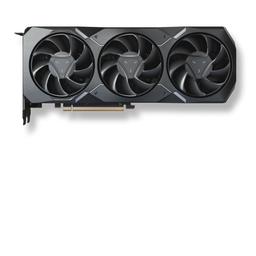
The cheapest way to run Gemma 4 26B-A4B well. Expect instant-feeling responses at ~99 tokens/sec.
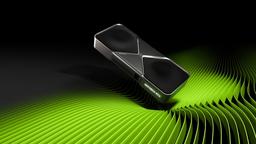
The fastest single-GPU experience for Gemma 4 26B-A4B. Expect instant-feeling responses at ~222 tokens/sec.
GPU Compatibility (Q4, 8k context)
Every GPU in our database, scored against Gemma 4 26B-A4B. Speed is estimated decode rate — memory-bandwidth-bound, so VRAM and bandwidth matter more than shader count.
| GPU | VRAM | Verdict | Est. speed | Price | |
|---|---|---|---|---|---|
| RX 7900 XT | 20 GB | Runs great | ~99 tok/sInstant-feeling | ~$588 used | Check price |
| RX 7900 XTX | 24 GB | Runs great | ~119 tok/sInstant-feeling | ~$838 used | Check price |
| RTX 3090 | 24 GB | Runs great | ~116 tok/sInstant-feeling | ~$1,150 used | Check price |
| RTX 4090 | 24 GB | Runs great | ~125 tok/sInstant-feeling | ~$2,375 used | Check price |
| RTX 5090 | 32 GB | Runs great | ~222 tok/sInstant-feeling | from $2,800 | Check price |
| RTX 3060 | 12 GB | Partial offload | — | ~$238 used | |
| Arc B570 | 10 GB | Partial offload | — | from $225 | |
| Arc B580 | 12 GB | Partial offload | — | from $250 | |
| RX 6700 XT | 12 GB | Partial offload | — | ~$315 used | |
| Arc A770 | 16 GB | Partial offload | — | from $300 | |
| RX 7700 XT | 12 GB | Partial offload | — | ~$415 used | |
| RX 6800 XT | 16 GB | Partial offload | — | ~$438 used | |
| RTX 3080 | 10 GB | Partial offload | — | ~$463 used | |
| RX 7800 XT | 16 GB | Partial offload | — | ~$488 used | |
| RTX 4070 | 12 GB | Partial offload | — | ~$500 used | |
| RTX 4070 SUPER | 12 GB | Partial offload | — | ~$563 used | |
| RTX 5060 Ti | 16 GB | Partial offload | — | from $550 | |
| RX 9070 | 16 GB | Partial offload | — | from $575 | |
| RTX 5070 | 12 GB | Partial offload | — | from $600 | |
| RX 9070 XT | 16 GB | Partial offload | — | from $600 | |
| RTX 4070 Ti SUPER | 16 GB | Partial offload | — | ~$750 used | |
| RTX 4080 SUPER | 16 GB | Partial offload | — | ~$900 used | |
| RTX 5070 Ti | 16 GB | Partial offload | — | from $900 | |
| RTX 5080 | 16 GB | Partial offload | — | from $1,250 | |
| RTX 4060 | 8 GB | Not enough VRAM | — | ~$275 used | |
| RX 7600 | 8 GB | Not enough VRAM | — | from $250 | |
| RTX 4060 Ti | 8 GB | Not enough VRAM | — | ~$338 used | |
| RTX 3070 | 8 GB | Not enough VRAM | — | ~$338 used | |
| RTX 5060 | 8 GB | Not enough VRAM | — | from $325 |
Frequently Asked Questions
How much VRAM do I need to run Gemma 4 26B-A4B?+
At the recommended Q4_K_M quantization with 8k context, Gemma 4 26B-A4B needs roughly 17.9GB of VRAM (15.8GB weights + KV cache + overhead). Q8 needs about 29.8GB and full FP16 about 54.1GB.
What is the cheapest GPU that runs Gemma 4 26B-A4B?+
AMD Radeon RX 7900 XT (20GB, ~$588 used) is the cheapest current GPU in our database that runs Gemma 4 26B-A4B fully in VRAM at an estimated ~99 tokens/sec.
Can I run Gemma 4 26B-A4B on an RTX 3060?+
Only partially — the RTX 3060 12GB can offload some layers to system RAM, but expect a large speed penalty.
Can I run Gemma 4 26B-A4B on a Mac?+
Yes, if the Mac has enough unified memory: budget roughly 17.9GB of RAM for the Q4 version (plus what macOS itself uses). Apple Silicon runs GGUF models well via Ollama or LM Studio, and MoE models like this one are particularly Mac-friendly — only 4B parameters are active per token, so memory bandwidth goes further.
Can I run Gemma 4 26B-A4B on CPU only?+
Sort of. Because only 4B of 26B parameters are active per token, CPU inference is more viable than for dense models this size — expect single-digit tokens/sec with fast DDR5. A GPU is still dramatically better.
Is Gemma 4 26B-A4B free for commercial use?+
Yes. Gemma 4 26B-A4B is released under the Apache 2.0, which permits commercial use.
Related Models
How we calculate these numbers
VRAM = model weights (parameters × bits per weight ÷ 8) + KV cache (architecture-specific bytes per token × context length) + ~1.2GB runtime overhead. Speed estimates assume decode is memory-bandwidth-bound at ~50% utilization (lower for MoE models, which pay routing overhead), matching typical llama.cpp performance on consumer cards; real results vary with runtime, drivers, and settings. Quant sizes reflect GGUF K-quants, which keep some layers at higher precision. Figures are estimates for planning, not guarantees — when in doubt, buy more VRAM than you need today. Prices shown are launch MSRP; mid-2026 street prices often run well above MSRP due to the ongoing memory shortage, and used 24GB cards are holding their value unusually well.